Why Burnout Is Really an Addiction Pattern
Aug 22, 2026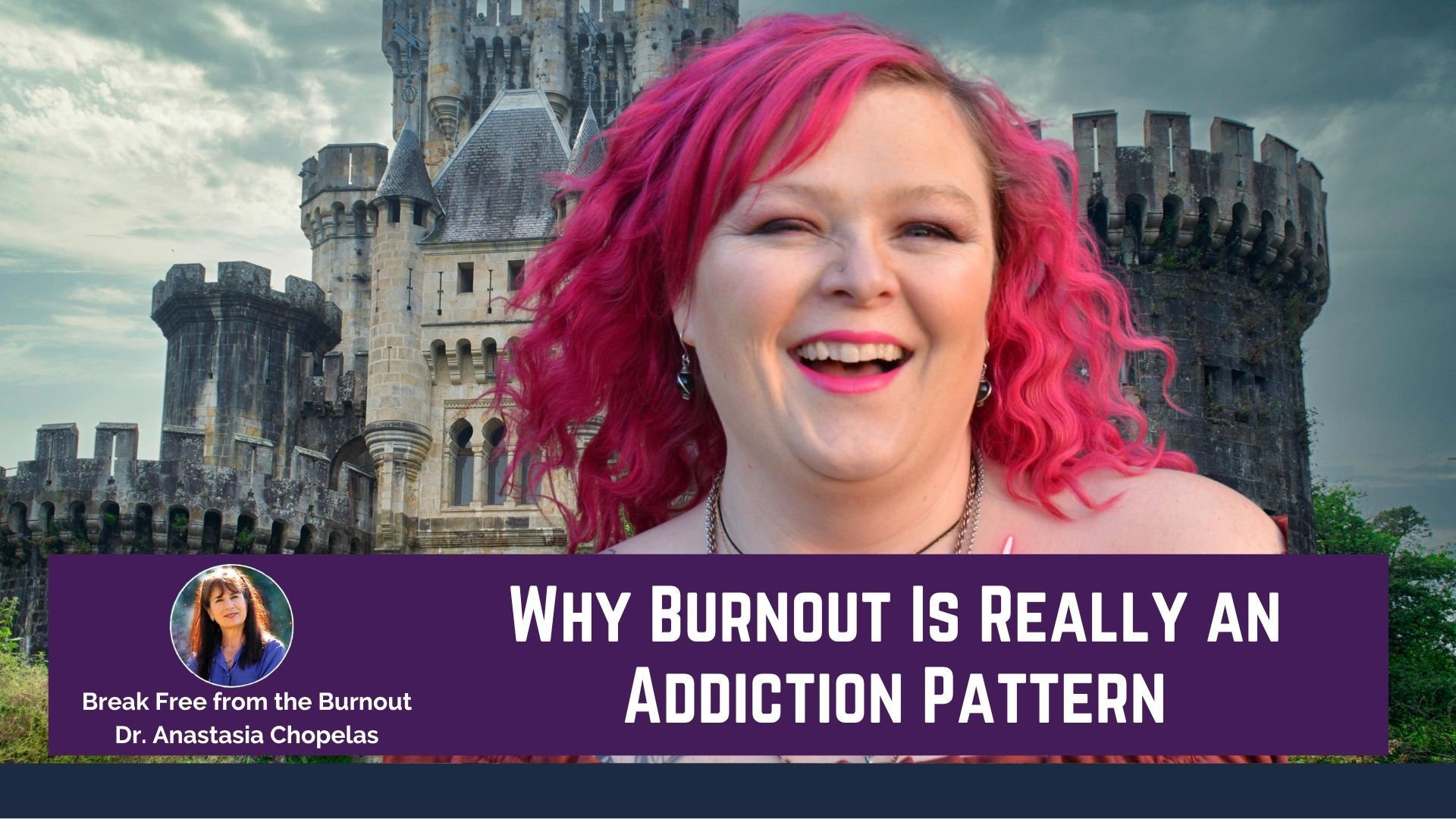
Key Takeaways
The real reason healers and entrepreneurs can't stop burning out
Burnout isn't a time-management problem. It's an addiction pattern — the same compulsive loop as substance use, just wearing a to-do list instead of a bottle. Psychic medium Sunshine Witchski, the pink-haired sober witch, joined this episode of Break Free From the Burnout to explain why highly sensitive people and empaths are especially prone to this pattern, why shadow work heals it faster than positivity ever will, and why the busyness you wear as a badge of honor is often just an unconscious belief that you haven't earned rest.
So many of the healers and coaches in our community are working incredibly hard and still feel stuck. Still feel depleted. Still feel like no matter how much they check off the list, the exhaustion doesn't lift.
Here's what most burnout advice misses: it treats the doing as the problem, when the doing is actually the symptom. Underneath it is a pattern that looks a lot like addiction — because it is one.
I sat down with Sunshine Witchski, psychic medium, soul healer, high priestess, and Reiki master, to get underneath the exhaustion so many of you are carrying. What we uncovered together is the real reason you can't seem to slow down, why your sensitivity might be working against you without your permission, and what it actually takes to rebuild your identity once the burnout finally breaks.
Burnout Is an Addiction Pattern, Not a Willpower Problem
The number one pattern Sunshine finds underneath exhaustion in her clients is addiction. And she doesn't just mean substances.
She's a recovering alcoholic and workaholic herself, and what she's watched over and over is people burning themselves out simply because they're caught on the addictive pattern of doing. You can be addicted to gaming. You can be addicted to watching YouTube videos. You can be addicted to eating. Any substance or behavior that causes a withdrawal response when you stop counts — and yes, that includes coffee.
Addiction is a way to numb yourself from life. But Sunshine takes it a layer deeper: it also keeps you disconnected from spirit, from your state of genius. She's watched entrepreneurs, high performers, people destined to do amazing things get so focused on the doing that they stop pausing to ask the questions that matter. Am I doing the right thing? Am I aligned with my highest vibrational path? Is this actually taking me toward my next level, or am I just checking boxes?
She admits she's guilty of it too — one of her most sheepish lessons, only a few years back, was realizing she'd gotten caught in the doing and never paused to ask spirit if that was really where she was best being of service.
The doing is an addiction in itself. We're human beings, not human doings. That's not a cute phrase — it's the entire fix. Be first. Then do. Not the other way around.
Why Highly Sensitive People and Empaths Burn Out Differently
If you're highly sensitive or empathic, conventional burnout advice was never built for you — and Sunshine names exactly why.
You may not even identify as highly sensitive. But if you're around other people and you just feel differently than everyone else in the room, that's the signature. The trouble starts when you're not fully aware of how sensitive you are while you're also trying to show up as the person you think you're supposed to be. The moment you encounter naysayers, or people who disagree with you, or people who are masking around you — and masking is far more common than most people realize, everyone showing up how they think they should rather than how they actually feel — you start absorbing it.
As the entrepreneur trying to do the right thing while highly sensitive, you pick up on all of it. You start masking too. You start doing things that have nothing to do with your own authenticity or integrity. And because it's still sitting in your shadow, unexamined, you become far more susceptible to operating under a prescription somebody else handed you instead of what you're actually aligned to do.
Sunshine has watched this play out one-on-one, over and over. She'll ask a client a simple question — why are you doing this? Are you happy doing this? — and they have no idea. She's watched the tears come when someone finally admits, no. I'm not happy with this.
I felt every word of that. There was a period where I had a great job and the rest of my life was a mess, and I remember wanting to just keep driving past my freeway exit instead of going home. Being both empathic and highly sensitive means you can feel someone's emotions the second you walk into a room — if they're upset, it's like getting itching powder all over your skin. If they're happy, it's soothing. So you learn to twist yourself into a pretzel keeping everyone happy, just so you don't get invaded by their energy. That's the empath's specific flavor of people-pleasing: it was never about being liked. It was about controlling your own discomfort.
Shadow Work Heals Burnout Faster Than Positivity Does
Pushing through and staying positive doesn't accelerate recovery from burnout. It delays it — because it keeps you from ever asking why.
Sunshine describes the pattern precisely: if you're constantly doing, acting like the Energizer Bunny, you're likely avoiding the actual symptoms of burnout. You're not pausing to ask why you've had indigestion for three days. Why you can't fall asleep. You just push through it.
Stepping into the shadow means asking the difficult questions instead. Why am I doing this? What is this really serving? Where might I be missing something? That's the willingness to look. And what surfaces is often something like: I'm not supposed to be doing this. This isn't making me happy. I'm doing this because my father held me to impossible expectations, or because my mother told me I'd never amount to anything.
Your body will tell you the truth before your mind admits it — Sunshine puts it plainly: the body lays claim to truths we're actively avoiding. That tracks with something I've seen constantly in my own work as a physicist turned energy healer — so many people chose a major, a career, a whole identity because someone else wanted it for them, and the body keeps score long after the mind has rationalized the choice.
Underneath the busyness specifically, Sunshine names the deeper unconscious belief: that we're not worthy of rest. Not worthy of ease. The universe was never asking anyone to have a hard life — that belief is ours, inherited, especially loud in Western culture, where you're taught you have to earn the right to play. Anyone in recovery knows this one intimately: the struggle to feel worthy of a beautiful, easy life without having to earn it first.
That's the real diagnostic question, and it's more useful than any productivity hack: have I lost the connection to the being? Not the doing. The being. You can love your work completely — Sunshine will happily work a fifteen-hour day and feel energized by every minute of it — and still lose that connection if you never check whether you're also engaging your loved ones, your friends, or just sitting with a trashy novel for the pure pleasure of it.
What To Do Next
If today's episode named something you've been feeling but couldn't quite explain, here's where to start:
- Ask yourself the shadow question directly: why am I doing this, and what is it really serving? Sit with the discomfort of the answer instead of rushing past it.
- Notice where you're masking — with clients, with family, with yourself — and get curious about what you'd say or do differently if you weren't.
- Stop reserving your spiritual practice for the mat. Notice the spiritual act already happening in your garden, your coffee ritual, your cooking. Everything can be the practice.
- Find your table. Isolation feeds the addictive pattern of doing; a room of people whose stories mirror yours is often what finally breaks it.
If you recognize yourself somewhere in this conversation — the overworking, the sensitivity, the shadow you've been avoiding, or just that quiet sense that something unseen is holding you back — trust that. It's information, not a flaw.
You don't have to carry what was never yours, and you don't have to do it alone. If this episode named something you've been circling for a while, that's your invitation to actually look at it — with support, with community, and with the kind of honest, science-grounded energy work we teach inside Break Free From the Burnout. Keep clearing. Keep rising.
Frequently Asked Questions
Q: Is burnout actually an addiction? A: Burnout often runs on the same compulsive loop as substance addiction — a pattern of doing that numbs you from discomfort and disconnects you from spirit. Psychic medium Sunshine Witchski identifies this "doing addiction" as the most common pattern underneath chronic exhaustion in healers, coaches, and entrepreneurs, even when no substance is involved.
Q: Why do highly sensitive people and empaths burn out more easily? A: Highly sensitive people and empaths absorb the emotional energy of everyone around them, including people who are "masking" or showing up inauthentically. Without awareness of that sensitivity, you end up people-pleasing and losing your own authenticity trying to manage everyone else's energy and your own discomfort.
Q: How is shadow work different from just "staying positive" about burnout? A: Staying positive often means pushing through symptoms without asking why they're there. Shadow work means pausing to ask the difficult questions — why am I doing this, what is it serving, what am I avoiding — which is the only way to find and heal the actual root cause instead of just managing the surface behavior.
Q: What does spiritual practice have to do with burnout recovery? A: Many people burn out on their spiritual practice itself, treating it as one more task to check off. Sunshine's reframe is to see everything — showering, cooking, gardening, morning coffee — as spiritual practice, which removes the pressure of "doing it right" and lets you live a spiritual life instead of performing a spiritual routine.
Q: Why does community matter so much in healing from burnout? A: Isolation tends to intensify addiction and burnout patterns because it leaves you alone with your own convincing stories. Being in a room with people whose experiences mirror yours — what Sunshine calls stepping into the collective consciousness — dissolves the isolation and lets you stop carrying your burdens by yourself.
About